Best Places to Visit in Dubai
Posted : September 02, 2026 | Last updated : September 02, 2026

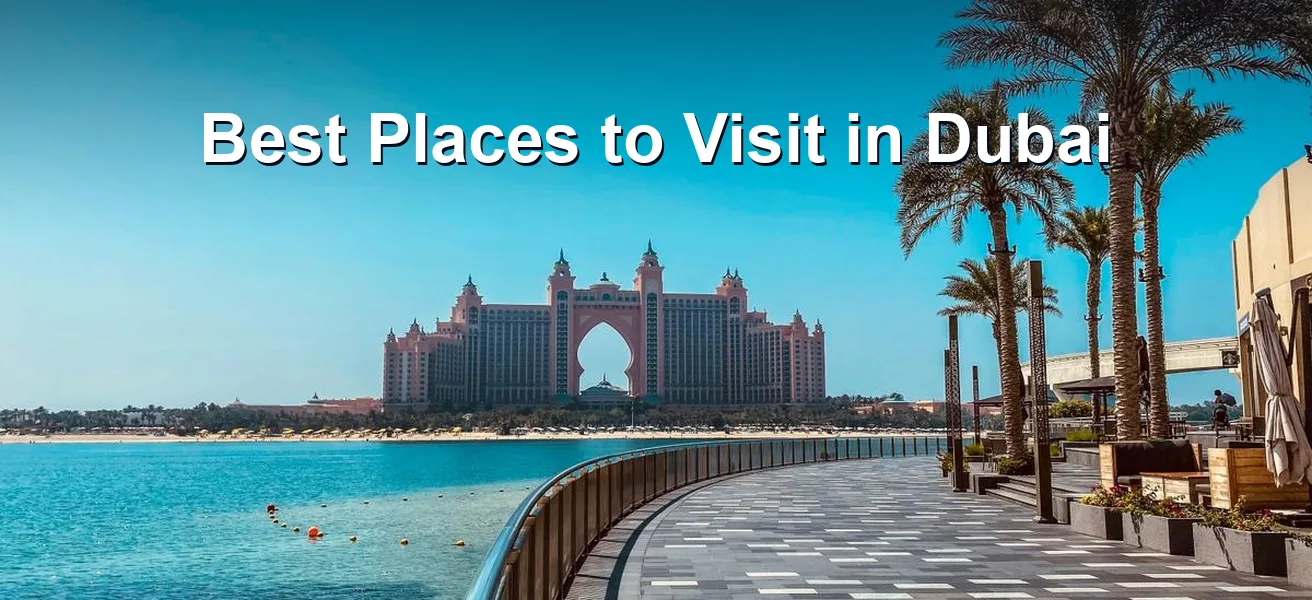
Dubai holds about twenty places that genuinely repay the journey. They divide into five groups: the modern landmarks around Downtown, the old trading quarters along the Creek, the beaches on the Jumeirah coast, the desert and lakes to the south, and the family attractions spread along Sheikh Zayed Road. A first visit of four or five days covers the strongest of them without rushing.
The list below is grouped by area, so that each group can be seen on a single drive. Every entry states where the place sits and roughly how long the drive takes from Downtown. It also gives the parking situation and whether the metro reaches it. Several well known attractions are closed at the time of writing. Those are marked plainly here, rather than left in the list to disappoint you on arrival.
Best Places to Visit in Dubai at a Glance
Drive times below are approximate and depend heavily on traffic. Allow considerably longer between 07:00 and 09:30 and again between 17:00 and 20:00 on weekdays.
| Place | Area | Best season | Approx. drive from Downtown | Parking |
|---|---|---|---|---|
| Burj Khalifa | Downtown Dubai | All year, indoor | On site | Dubai Mall car parks, paid |
| Dubai Frame | Zabeel Park | November to March | 10 to 15 minutes | On site |
| Burj Al Arab | Umm Suqeim | All year | 20 to 25 minutes | Hotel valet, booking only |
| The View at the Palm | Palm Jumeirah | All year, indoor | 25 to 30 minutes | Nakheel Mall, paid |
| Al Fahidi neighbourhood | Bur Dubai | November to March | 15 to 20 minutes | Street parking, paid |
| Dubai Creek and abras | Bur Dubai and Deira | November to March | 15 to 20 minutes | Limited, arrive early |
| Gold and Spice Souks | Deira | November to March | 20 to 25 minutes | Difficult, use a car park |
| Jumeirah Mosque | Jumeirah 1 | All year | 15 minutes | Street parking, paid |
| JBR and The Beach | Dubai Marina | October to April | 25 to 30 minutes | Covered car parks, paid |
| Kite Beach | Umm Suqeim | October to April | 20 minutes | On site, paid |
| La Mer and Jumeirah Beach | Jumeirah | October to April | 15 to 20 minutes | On site, paid |
| Dubai Marina and Bluewaters | Dubai Marina | October to April | 25 to 30 minutes | Mall car parks, paid |
| Dubai Miracle Garden | Al Barsha South | Winter season only | 25 to 30 minutes | On site |
| Al Qudra Lakes and Love Lake | Saih Al Salam | November to March | 40 to 50 minutes | Roadside, unpaved |
| Al Marmoom Reserve | Saih Al Salam | November to March | 40 to 50 minutes | Designated areas only |
| Hatta | Hajar Mountains | November to March | 90 minutes or more | On site |
| The Dubai Mall | Downtown Dubai | All year, indoor | On site | Large, paid, fills fast |
| Ski Dubai | Al Barsha | All year, indoor | 20 minutes | Mall car park, free periods |
| IMG Worlds and Legoland | City of Arabia, Jebel Ali | All year | 25 to 40 minutes | On site |
| Sheikh Zayed Grand Mosque | Abu Dhabi | November to March | Allow most of a day | On site |
How many places are worth visiting in Dubai?
About twenty places justify a dedicated trip, and roughly eight of those belong on a first visit of under a week. The city concentrates its attractions into a narrow coastal strip about forty kilometres long, so a visitor who plans by area rather than by ranking will see far more in the same number of days.
Splitting the list by district gives a practical shape to a short holiday:
- Downtown Dubai for the Burj Khalifa, the fountain and the mall
- Bur Dubai and Deira for the Creek, the souks and the historical quarter
- Jumeirah and Umm Suqeim for the beaches and the Burj Al Arab views
- Dubai Marina and Palm Jumeirah for the waterfront and the observation decks
- Saih Al Salam and Hatta for the desert, the lakes and the mountains
What is the single best place to visit in Dubai?
The Burj Khalifa and the Downtown district around it is the one place that no first visit should miss. The tower, the fountain, the mall and the older Souk Al Bahar sit within a ten minute walk of each other, which makes the area the densest concentration of things to see anywhere in the city.
That answer changes with the travel party and the season. Families with young children often get more from the Dubai Mall aquarium and Ski Dubai. Visitors arriving in cooler months frequently rate the desert at Al Qudra above any built attraction. A traveller with a single free evening should still choose Downtown.
Iconic Landmarks and Viewpoints
These are the structures that shape the skyline and appear on every itinerary. Four of them sit within half an hour of each other along the coast, which makes a single day of landmark visits realistic.
Burj Khalifa
The Burj Khalifa is the tallest building in the world and the anchor of Downtown Dubai. Its observation decks occupy several levels, and the experience differs sharply between them. The lower decks give a closer view over the fountain and the mall. The highest level trades that detail for distance. Tickets are timed, and sunset slots sell out first.
Practical notes for a visit:
- Area: Downtown Dubai, entered through the lower ground floor of the Dubai Mall
- Parking: the Dubai Mall car parks, paid, and busiest after 18:00
- Metro: yes, Burj Khalifa and Dubai Mall station on the Red Line, then a long indoor walk
- Best time: late afternoon, so that the view covers daylight, sunset and the lit city
The fountain at the base runs through the evening and costs nothing to watch. Many visitors rate it more highly than the deck itself. The best free vantage point is the bridge between the mall and Souk Al Bahar.
Is the Dubai Frame worth visiting?
Yes. The Dubai Frame does something no other viewpoint in the city manages. It faces old Dubai on one side and the modern skyline on the other, which turns the view itself into the exhibit. The glass floor on the upper walkway is the part most visitors remember.
It sits inside Zabeel Park, about ten to fifteen minutes from Downtown, with parking on site. The visit is short, usually under an hour. It pairs naturally with the Creek or the souks on the same afternoon, rather than filling a day of its own.
Is the Museum of the Future open?
No. The Museum of the Future is temporarily closed. Its own website states that the building is closed while it prepares for its next chapter. The exhibitions are unavailable, and only the retail store and selected experiences remain open.
The building is still worth passing on Sheikh Zayed Road. The calligraphy shell is the point of interest from outside, and the drive costs nothing extra. Check the museum website before planning a stop, as a reopening has not been dated publicly.
Burj Al Arab
The Burj Al Arab is not a public building, and this catches out a large number of visitors every year. Access requires a restaurant reservation, a tour booking or a hotel stay, so a spontaneous walk-in is not possible.
The free alternative is the view from the public end of Umm Suqeim Beach. That vantage point puts the hotel on the horizon across the water. That vantage point is the one used for nearly every photograph of the building, and it costs nothing beyond the parking.
The View at the Palm
The View at the Palm is the observation deck on the fifty-second floor of the Palm Tower, and it exists for one specific purpose: it is the only place from which the shape of Palm Jumeirah is legible. From ground level the island simply reads as ordinary streets and villas.
Parking sits underneath at Nakheel Mall, and the deck is reached by lift from inside. Tickets are timed here as well, and the late afternoon slot again gives the widest range of light for the same price.
How do you visit Palm Jumeirah?
Drive in along Al Khaleej Al Arabi Street onto the trunk of the island, which is the route almost every visitor uses. The island is a residential district with public attractions scattered along it, so no single entrance or ticket exists.
The three practical stopping points are these:
- Nakheel Mall for The View at the Palm, with paid parking underneath
- The Pointe at the far end, for the waterfront promenade facing Atlantis
- Atlantis The Palm itself, for the aquarium and the waterpark, both ticketed
A monorail runs the length of the trunk. It connects poorly to the rest of the network. Most visitors find a rental car simpler for reaching the island and moving between its three stops.
Old Dubai and Cultural Places
The Creek district is the older half of the city and the part most visitors underestimate. It is also the cheapest area to spend a day in. The museums charge modest entry, and the boat crossing costs a single dirham. Visit between November and March, as almost everything here is done on foot and outdoors.
Al Fahidi Historical Neighbourhood
Al Fahidi is the restored quarter of wind-tower houses on the Bur Dubai side of the Creek. It is the closest thing Dubai has to a preserved old town. The lanes are narrow, shaded and walkable. It is one of the few places in the city that rewards wandering without a plan.
Inside the quarter are small museums, coffee houses and galleries. A cultural centre runs shared meals and open question sessions, for visitors who would rather ask about local customs directly. Al Fahidi Fort, the oldest building in Dubai, sits at the edge of the quarter.
- Area: Bur Dubai, on the south bank of the Creek
- Parking: paid street parking on the surrounding roads, tight after 10:00
- Metro: yes, Al Fahidi station on the Green Line, a short walk away
- Best time: early morning in winter, when the lanes are empty and cool
Dubai Creek and the abra crossing
The abra crossing is the best value experience in Dubai at one dirham per person. Abras are the small wooden boats that ferry passengers across the Creek between Bur Dubai and Deira. They have run the same routes for decades as working transport, not as a tourist attraction.
The Roads and Transport Authority publishes the fares, and they are worth knowing before queuing:
- Traditional motorised abra: AED 1 per passenger per trip
- Petrol heritage abra: AED 2 per trip, on the Al Fahidi to Deira Old Souq and Dubai Old Souq to Baniyas routes
- Air-conditioned abra: AED 2 per person, on the Al Jaddaf to Dubai Festival City route
- Water taxi: AED 7 to AED 21 depending on the distance travelled
Pay the driver in cash on board. The crossing takes about five minutes and drops you within walking distance of the souks. It is the natural link between the two halves of a day in old Dubai.
Gold Souk and Spice Souk
The Gold Souk in Deira is a covered street of jewellery shops. The Spice Souk sits a few minutes away towards the water. Gold is sold by weight at a rate tied to the daily market price, with the workmanship charged separately. The quoted figure is negotiable, which surprises many first-time visitors.
The practical problem here is parking rather than the souks themselves. Deira is dense, older and laid out before mass car ownership. Street spaces near the entrances are rarely free during trading hours.
- Parking: difficult, use a multi-storey car park and walk in
- Better approach: park on the Bur Dubai side and cross by abra, which avoids the problem completely
- Metro: yes, Al Ras station on the Green Line sits close to both souks
- Best time: after 16:00, when the shops reopen and the heat drops
Jumeirah Mosque
Jumeirah Mosque is one of the few mosques in Dubai that opens to non-Muslim visitors. Entry is by guided tour rather than free access. The tours run most mornings and include an open question session. That session is the reason to come, since the guides answer questions about faith and local life directly and without formality.
Modest dress is required, covering shoulders and knees, and headscarves are provided at the door for women who need one. The tour lasts a little over an hour and sits about fifteen minutes from Downtown along Jumeirah Beach Road, which pairs it easily with a beach afternoon.
Beaches and Waterfront
Dubai has a continuous public shoreline running from Jumeirah to the Marina, and most of it is free to enter. Season matters more here than anywhere else on this list, for example on the open beaches where shade is scarce. Between October and April the beaches are the best part of the city, while in July and August the sand becomes genuinely unpleasant before mid-morning.
JBR and The Beach
Jumeirah Beach Residence combines an open public beach with a low-rise retail strip called The Beach directly behind it. The combination is what makes it work for a whole day. The swimming, the food and the shade all sit within a few minutes of each other, which is unusual on this coast.
- Area: Dubai Marina, at the southern end of the coast
- Parking: covered car parks beneath The Beach, paid, and worth the cost in summer
- Metro: partly, via the tram from Jumeirah Lakes Towers, which adds a change
- Best time: late afternoon into the evening, when the promenade is busiest
Kite Beach
Kite Beach is the most active stretch of the Dubai shoreline, with kitesurfing, beach sports such as volleyball, and a running track behind the sand. It also holds the clearest straight-on view of the Burj Al Arab. That view is why many visitors choose it over a quieter beach.
Facilities are better than on the older public beaches, including showers, changing rooms and a long line of food outlets. Parking sits directly behind the sand and fills quickly on Fridays and Saturdays.
La Mer and Jumeirah Public Beach
La Mer is a developed beachfront with restaurants and a waterpark behind it, and Jumeirah Public Beach is the plain open stretch nearby. They sit on the same drive, about fifteen to twenty minutes from Downtown, so most visitors see both on one afternoon.
The choice between them depends on what the day is for. La Mer suits visitors who want food, shade and facilities within reach of the water. Jumeirah Public Beach suits anyone who wants an uncomplicated swim with fewer people and no entrance structure at all.
Dubai Marina and Bluewaters
Dubai Marina is a dense waterfront district of towers around an artificial canal. The seven kilometre Marina Walk that circles it is free, flat and open at all hours. Bluewaters Island sits just offshore, linked by a bridge and reachable on foot from JBR.
Ain Dubai, the observation wheel on Bluewaters, is not reliably operating. It closed in March 2022, reopened briefly in January 2025, and has been unavailable since. Check its status before travelling if a ride is the reason for the visit, and treat the island itself as the attraction rather than the wheel.
- Parking: mall car parks at Marina Mall and Bluewaters, both paid
- Metro: yes, DMCC and Sobha Realty stations on the Red Line, then a walk or tram
- Free option: the Marina Walk and the Bluewaters promenade cost nothing
- Best time: evening, when the towers light and the temperature drops
Parks, Gardens and the Desert
This is the group that separates visitors who hire a car from those who do not. None of the four places below is reached by metro, and taxi fares to the desert become significant once the return trip is counted. All four are winter destinations, and two of them close entirely over the summer.
Dubai Miracle Garden
Dubai Miracle Garden is a seasonal flower garden in Al Barsha South, built around large floral sculptures rather than open planting. It operates roughly from 09:00 to 21:00 during its season and closes over the hottest months. That closure is the single most important thing to check before setting out.
The season dates change from year to year and are not published far ahead. The garden typically reopens for the winter from around November, so confirm the current dates on the operator website before you drive out. A wasted forty minute journey to a closed gate is a common complaint.
- Area: Al Barsha South, near Dubailand
- Parking: large car park on site
- Metro: no, the network does not reach it
- Best time: the first hour after opening, before the crowds and the heat
Al Qudra Lakes and Love Lake
Al Qudra Lakes are man-made lakes in the desert south of the city. Love Lake is the best known of them: two large interconnected lakes cut into the shape of hearts, covered in full in our guide to Love Lake Dubai. The shape reads properly only from the air, though the setting is pleasant enough at ground level. Around 170 bird species use the water, along with foxes and oryx in the surrounding sand. Our guide to Al Qudra desert and lake sets out the cycle track, the camping rules and the individual lakes.
The drive out is part of the appeal. Al Qudra Road runs straight into open desert, and the cycle track alongside it is one of the longest in the region. Anyone unfamiliar with local road conditions should read our notes on desert driving before heading out, since conditions differ from what most visitors are used to.
- Area: Saih Al Salam, roughly forty to fifty minutes from Downtown
- Parking: roadside and unpaved, so keep to firm ground and do not drive onto soft sand
- Metro: no, and taxis are difficult to find for the return journey
- Best time: sunrise or the last hour before sunset, when birds and animals are active
Bring water and fuel up before leaving the city. Facilities out here are limited, and mobile coverage is patchy in places.
Al Marmoom Desert Conservation Reserve
Al Marmoom is the largest protected area in the emirate, covering close to 23 per cent of Dubai. Dubai Municipality describes it as one of the first unfenced desert sanctuaries in the country opened to the public for sustainable recreation. Al Qudra Lakes sit within its boundaries.
The wildlife is the reason to come. The reserve supports desert species such as the Arabian oryx, the sand gazelle and the Arabian gazelle, along with a wide range of birds and reptiles. Visitor access is limited to designated zones, and the surrounding desert is genuinely protected rather than decorative, so stay on marked routes. Our full guide to the Al Marmoom Desert Conservation Reserve covers the trails, the hides and the best hours for wildlife.
Mushrif Park
Mushrif Park sits east of the city towards Al Khawaneej and works best for families who want shade rather than sights. It combines woodland, cycle tracks, a pool and picnic areas across a large site, which makes it the greenest place on this list.
It is a drive-in park with parking inside the gates, and the metro does not reach it. Charges apply on entry and change periodically, so check before travelling. Our guide to Mushrif National Park and its swimming pool covers the facilities and current ticketing.
Hatta
Hatta is a mountain enclave of Dubai in the Hajar range, about ninety minutes east of the city on a good run. It is the strongest argument on this page for hiring a car. The drive itself is the attraction, and no public transport serves it usefully.
The dam and its turquoise reservoir are the centrepiece, with kayaks available on the water and hiking and mountain-bike trails cut into the surrounding slopes. Temperatures run several degrees below the coast, which extends the comfortable season at both ends.
Family Attractions and Theme Parks
Dubai is unusually well suited to families, largely because so much of its entertainment sits indoors and air-conditioned. That matters between May and September, when outdoor plans become difficult and the malls turn into the practical centre of a holiday.
The Dubai Mall, aquarium and fountain
The Dubai Mall is a destination rather than a shopping centre, and three of its attractions justify a visit on their own, such as the aquarium and underwater zoo, the Olympic-size ice rink, and the fountain on the lake outside. The fountain runs through the evening and is free to watch.
Parking is the real question here, and it defeats a surprising number of visitors. The car parks are large but fill from late afternoon, and the multi-storey sections are payable around the clock rather than free on Sundays like street parking. Our guide to how to pay parking in Dubai sets out the payment methods before you arrive.
- Parking: extensive but congested after 16:00, and charged 24 hours in the multi-storey areas
- Metro: yes, Burj Khalifa and Dubai Mall station, connected by a long covered walkway
- Free to do: the fountain show, the aquarium viewing panel from inside the mall
- Best time: weekday mornings for the aquarium, evenings for the fountain
Ski Dubai at Mall of the Emirates
Ski Dubai is an indoor ski slope inside Mall of the Emirates, complete with real snow, a chairlift and a resident colony of penguins. Clothing and boots are included in the ticket. That removes the main obstacle for visitors travelling without winter gear.
It sits about twenty minutes from Downtown along Sheikh Zayed Road, with the mall car park underneath and Mall of the Emirates station on the Red Line directly connected. The slope is one of the few attractions in the city that is genuinely better in summer, when the contrast with the heat outside is the whole point.
Global Village
Global Village is closed at present and reopens for the winter. Season 30 ran from 15 October 2025 to 10 May 2026, and the next season is expected to return in October 2026. It follows the same annual pattern, closing across the hot months.
When open, it is a large outdoor park of national pavilions, each selling food and goods from its country. A funfair and stage shows run alongside. Entry is inexpensive relative to the theme parks, which makes it one of the better value evenings in the city during its season. It sits on Sheikh Mohammed Bin Zayed Road with parking on site and no metro link.
Dubai Safari Park
Dubai Safari Park is a large open-range zoo at Al Warqa, arranged into regional zones so that African, Asian and Arabian species each occupy their own section. It is a seasonal attraction that operates through the cooler months rather than all year.
Animals are most active in the first hour after opening, which is the argument for an early start. Parking is on site, no metro line serves it, and our guide to Dubai Safari Park tickets and reviews covers the zones and the current season.
IMG Worlds and Legoland
IMG Worlds of Adventure is an indoor theme park at City of Arabia, and Legoland Dubai sits further out at Dubai Parks and Resorts towards Jebel Ali. Both are car destinations, roughly twenty-five to forty minutes from Downtown depending on which one is chosen and the traffic at the time.
Being indoors, IMG Worlds works in any season. Legoland is largely outdoors and is better kept for the cooler months, particularly with younger children. Neither is served by the metro, and both charge for parking on site.
Day Trips You Can Drive To
Three destinations outside Dubai are close enough for a single day, and all three need a car to be practical, whether you drive yourself or travel with a driver. Journey times below are approximate and depend on traffic and on where in each city the destination sits.
Sheikh Zayed Grand Mosque, Abu Dhabi
The Sheikh Zayed Grand Mosque in Abu Dhabi is the most rewarding day trip from Dubai. It is open to visitors of all faiths, entry is free, and the scale of the courtyard and prayer hall is difficult to convey in photographs.
The drive runs down the E11 or the E311, and most of a day is needed once the journey, the visit and the return are counted. Dress requirements are enforced at the entrance: long sleeves and long trousers or skirts, with hair covered for women. Our guide to renting a car in Abu Dhabi covers the rest of the city for a longer stay.
Sharjah museums and the Al Noor Mosque
Sharjah borders Dubai to the north and holds the densest concentration of museums in the country, including the Sharjah Museum of Islamic Civilisation and the Sharjah Art Museum. The Al Noor Mosque on the lagoon opens to non-Muslim visitors on guided tours.
The drive is short, often under an hour outside peak times, but the border traffic between the two emirates is heavy at commuting hours in both directions. Travel mid-morning and return before 16:00. Our guide to places to visit in Sharjah sets out the full list.
Al Ain and Jebel Hafeet
Al Ain is the inland garden city on the border with Oman, and Jebel Hafeet is the mountain above it. The road up the mountain is the reason to make the trip. It is a long series of engineered switchbacks climbing to a viewpoint over the desert, widely regarded as one of the best driving roads in the region.
Al Ain itself holds other draws, such as the oasis, the camel market and a set of restored forts. It is the furthest of the three day trips and works best as a full day with an early start.
When to Visit Dubai and What It Costs
Season affects a Dubai holiday more than any other single decision. It changes which places on this list are open and how long visitors can stay outdoors. It also changes what a hotel room costs, often by a factor of two or more.
What is the best month to visit Dubai?
November to March is the best window, and December to February is the strongest part of it. Daytime temperatures in those months sit in a range that makes the beaches, the desert and the Creek district comfortable, which is when the city is at its best.
The trade-off is cost and crowding. Hotel rates in the winter peak run well above the summer figures, the attractions are busiest, and the popular restaurants need booking. October and April sit either side of the peak and offer a reasonable compromise between weather and price.
Is Dubai a good place to visit in summer?
Yes, with conditions. July and August bring severe heat and high humidity, which rules out sustained time outdoors between mid-morning and late afternoon. A summer visit works only if the itinerary is built around indoor attractions, such as the malls, the aquarium and the observation decks.
What still works well in summer:
- The Dubai Mall, the aquarium and the ice rink
- Ski Dubai, which is arguably better in summer than winter
- IMG Worlds of Adventure, which is entirely indoors
- The Burj Khalifa observation decks and The View at the Palm
- Hotel pools and beach clubs in the early morning and after sunset
What does not work: the desert, the souks on foot, Hatta, the day trips and the public beaches during daylight. Hotel prices fall sharply to compensate, so summer suits a mall-and-pool holiday rather than a sightseeing one.
Is Dubai safe to visit?
Yes. Dubai has a very low rate of street crime, and visitors move around the city at night without particular concern. The practical risks are environmental rather than personal, such as heat exhaustion in summer and unfamiliar road conditions.
The one area that catches visitors out is the difference in law rather than danger. A handful of behaviours that pass unremarked elsewhere carry real penalties here. They are listed in the next section.
What should you know before visiting Dubai?
Dubai is relaxed by regional standards and stricter than most European or North American cities. The rules below are the ones that most often surprise first-time visitors:
- Dress: ordinary summer clothing is fine in malls, hotels and beaches. Cover shoulders and knees at mosques, and dress more conservatively in the older districts and government buildings.
- Alcohol: served in licensed hotels, restaurants and bars. Drinking in public places or being drunk in public is an offence.
- Photography: do not photograph people without permission, and avoid photographing government buildings, military sites and airports.
- Ramadan: the daily rhythm shifts, as many residents fast between sunrise and sunset. Eating, drinking and smoking in public during daylight is avoided, and many restaurants adjust their hours. The dates move each year with the lunar calendar.
- Currency: the dirham is pegged to the United States dollar. Cards are accepted almost everywhere, though the abras and some souk stalls take cash only.
- Medication: prior approval to bring in controlled or narcotic medicines is optional rather than mandatory. Travellers may either obtain electronic approval in advance from the Ministry of Health and Prevention, or declare the medicine on arrival with the prescription and a medical report. Quantities are limited to three months of supply for controlled medicines and six months for prescription-only medicines.
- Tap water: safe at the point of supply. It is desalinated at the Jebel Ali complex and sampled daily against World Health Organization drinking-water standards, in a laboratory accredited to ISO/IEC 17025. Many residents still prefer bottled water for taste.
Which places in Dubai are free to visit?
A large part of this list costs nothing. Dubai has a reputation as an expensive destination, and the hotels and theme parks earn it, but the waterfront, the old quarters and several of the best views are open to everyone at no charge.
Free to visit, and worth the time:
- The Dubai Fountain at the base of the Burj Khalifa, which runs through the evening
- Dubai Marina Walk, seven kilometres of waterfront, flat and open at all hours
- The Bluewaters promenade, reached on foot from JBR
- The public beaches at JBR, Kite Beach and Jumeirah Public Beach
- Umm Suqeim Beach, which holds the free view of the Burj Al Arab
- The Pointe on Palm Jumeirah, facing Atlantis across the water
- Al Fahidi Historical Neighbourhood, where walking the lanes costs nothing and only the museums charge
- The Gold and Spice Souks, free to walk through and browse
- Sheikh Zayed Grand Mosque in Abu Dhabi, where entry is free to visitors of all faiths
Two further ways to keep costs down: the abra crossing at one dirham is the cheapest thing on this page rather than free, and street parking costs nothing on Sundays and public holidays, which makes Sunday the cheapest day to drive between several of these places.
How to Get Around Dubai
The choice between hiring a car and relying on public transport determines how much of this list is realistically reachable. The honest answer depends on which places matter to you, so the sections below set out exactly what the metro covers and what it does not.
Can you visit Dubai without a car?
Partly. The metro serves the modern coastal corridor well and the rest of the emirate poorly, which means a car-free visit covers perhaps half the places on this page.
The network, as published by the Roads and Transport Authority, runs as follows:
- Red Line, 52 km: follows the Sheikh Zayed Road corridor, serving Dubai Marina, JBR by tram, Mall of the Emirates, Downtown Dubai and the Burj Khalifa
- Green Line, 23 km: loops through Deira and Bur Dubai along the Creek, serving Al Fahidi, the souks at Al Ras and the historical quarter
- Route 2020, 15 km: extends the network towards Expo City in the south-west
- Blue Line, 30 km: under construction, with services due to begin in September 2029
Between them, the two operating lines reach Downtown, the Marina, Mall of the Emirates and the whole Creek district. That is enough for a short first visit focused on the landmarks and old Dubai.
The metro does not reach any of the following: Dubai Miracle Garden, Al Qudra Lakes, Al Marmoom, Hatta, IMG Worlds, Legoland, Global Village, or any of the three day trips. Palm Jumeirah is served only by a monorail that connects poorly to the main network. Anyone intending to see the desert, the mountains or the theme parks needs a car or a series of expensive taxi fares.
There are two ways to close that gap. Driving yourself is cheaper and gives the most control over timing, which matters for the places best seen at sunrise. The alternative is to rent a car with a driver in Dubai, which suits visitors who would rather not drive on unfamiliar roads, groups who would otherwise split across two taxis, and long days out to Hatta or Abu Dhabi where the driving itself is the tiring part.
Is parking free in Dubai?
Not usually. Public parking is paid, and the rules are consistent across the city, which makes them easy to plan around once they are known.
- Paid from 08:00 to 22:00 every day except Sunday
- Free all day on Sundays and on public holidays
- Multi-storey car parks are payable 24 hours a day, including Sundays, which is the exception that catches people out
- During Ramadan, public parking is free between 06:00 and 08:00
Payment is by app, by SMS or at the roadside machines. The full method is set out in our guide to paying parking in Dubai.
What car suits a Dubai itinerary?
Match the car to the parts of this list that matter most, rather than to the length of the holiday:
- A compact car suits a trip built around Downtown, the beaches and the Creek. Easier to park in Deira and Bur Dubai, where space is the constraint.
- A mid-size sedan suits a mixed itinerary that adds the day trips to Abu Dhabi or Sharjah, where motorway comfort matters more than parking.
- An SUV suits families and anyone heading to Hatta or the desert routes, where ground clearance and luggage space both count.
- A longer hire works out cheaper per day for stays beyond a few weeks, which is worth checking against monthly car rental in Dubai rates before booking by the day.
Roads are wide, well surfaced and clearly signed, and speed limits are camera-enforced throughout. Fuel is inexpensive by European standards, which keeps the running cost of the desert and mountain drives low.
The desert, Hatta and the day trips all sit beyond the network. Visitors heading that way can rent a car in Dubai and cover this entire list on their own schedule, rather than building the holiday around whatever the metro happens to reach.
Car Rentals and Car with Driver in Dubai and across the UAE
UAEdriving is a car rental and car with driver service in Dubai and across the UAE, since 2018.


© 2018-2026 UAEdriving.com by Unisys Technologies LLC. All Rights Reserved.